
The Middle Class Can’t Even Afford the Build Cost Anymore
In 1990, a typical home cost about 2.6 times income. In 2024, construction alone cost more than that old “affordable” price.

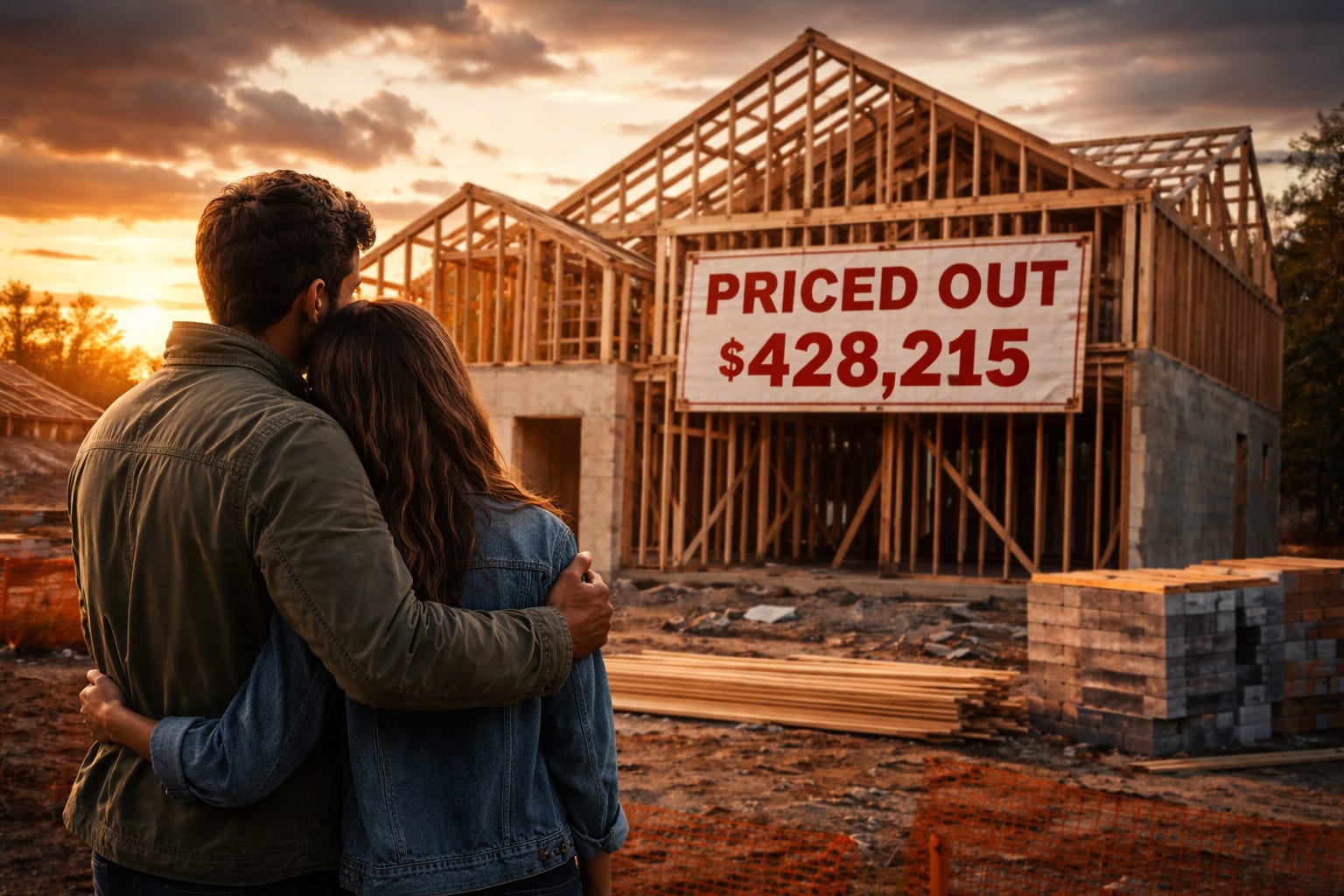
A house used to feel hard.
Now it feels forbidden.
That is the real housing story.
In 1990, the median value of a one-family U.S. home was $79,100 — about 2.6 times median household income. In 2024, the median existing single-family home price hit $412,500, about 5 times median household income. If homes still sold at that old 2.6x multiple, the median price would be about $214,500 instead.
Pause there.
That is not just a number.
That is the difference between a home being difficult and a home being out of reach.
The difference between saving and surrendering.
Between getting started and staying stuck.
Between building a family and postponing one.
People are told this is normal.
That housing is just “competitive.”
That young people need to be patient.
That everyone struggles at the beginning.
But this is not the beginning anymore.
This is delay becoming a lifestyle.
This is thirtysomethings living like students.
This is couples postponing children because they cannot find a second bedroom.
This is adulthood with the volume turned down.
“Housing is so broken that the old affordable price will not even build the house.”
And here is the most brutal part.
According to the National Association of Home Builders, in 2024, the construction cost alone of a typical new single-family home was $428,215. Total sale price: $665,298. Construction accounted for 64.4% of the sale price.
Read that again.
Construction alone: $428,215.
That means the old middle-class price — roughly $214,500 at the 1990 income multiple — does not even cover the build anymore.
That is how broken this has become.
The old affordable price does not buy the house.
It does not buy the land.
It does not even buy the construction.
So when people say the middle class should just work harder, save more, be more realistic — realistic about what?
About earning less than it costs to pour the foundation of a normal life?
Because that is what this has become.
A home used to be something your paycheck could stretch toward.
Now it is something your parents may have to unlock.
Inheritance. Help with the deposit. A gifted down payment. A family loan. A spare room for longer than planned.
Without that, millions of people are not climbing a ladder.
They are staring at one.
And the older NAHB numbers show this did not happen overnight. In 1998, construction accounted for 54.8% of the average sales price of a new single-family home. By 2024, that share had climbed to 64.4%.
So where does the money go now?
Into lumber, concrete, wiring, plumbing, labor, site work, permit fees, water and sewer fees, architecture, engineering, financing, overhead, commissions, and profit. The biggest 2024 construction line items were interior finishes, major systems rough-ins, and framing.
So yes, homes are overpriced.
But they are also genuinely expensive to produce.
That is what makes this crisis so merciless.
The market price is too high for ordinary paychecks.
And the cost of building is now so high that the old idea of affordability feels like a story from another country.
This is not just a housing problem.
It is a life problem.
It is why people marry later.
Why they have fewer children.
Why they stay in cramped rentals, shared flats, old bedrooms, and half-started lives.
Why the middle class feels tired before it has even begun.
Because once housing stops being shelter, it becomes permission.
Permission to move out.
Permission to settle down.
Permission to have a child.
Permission to become the adult you thought you were going to be.
That is the theft.
Not that houses became expensive.
That a normal life now costs more than normal work can buy.
The crisis is no longer just that homes are overpriced. It is that the middle class now earns less than it costs to build the life it was promised.
Let's face it there are three classes in America now: the wealthy, an ever shrinking middle class who know they can lose it all at any moment, and a great mass of working poor who won't ever get to the ladder, much less hook their worn out boots on that first rung.
Oof the ending few sentences hit hard - well said